

Blog
Urology Instruments in Surgery

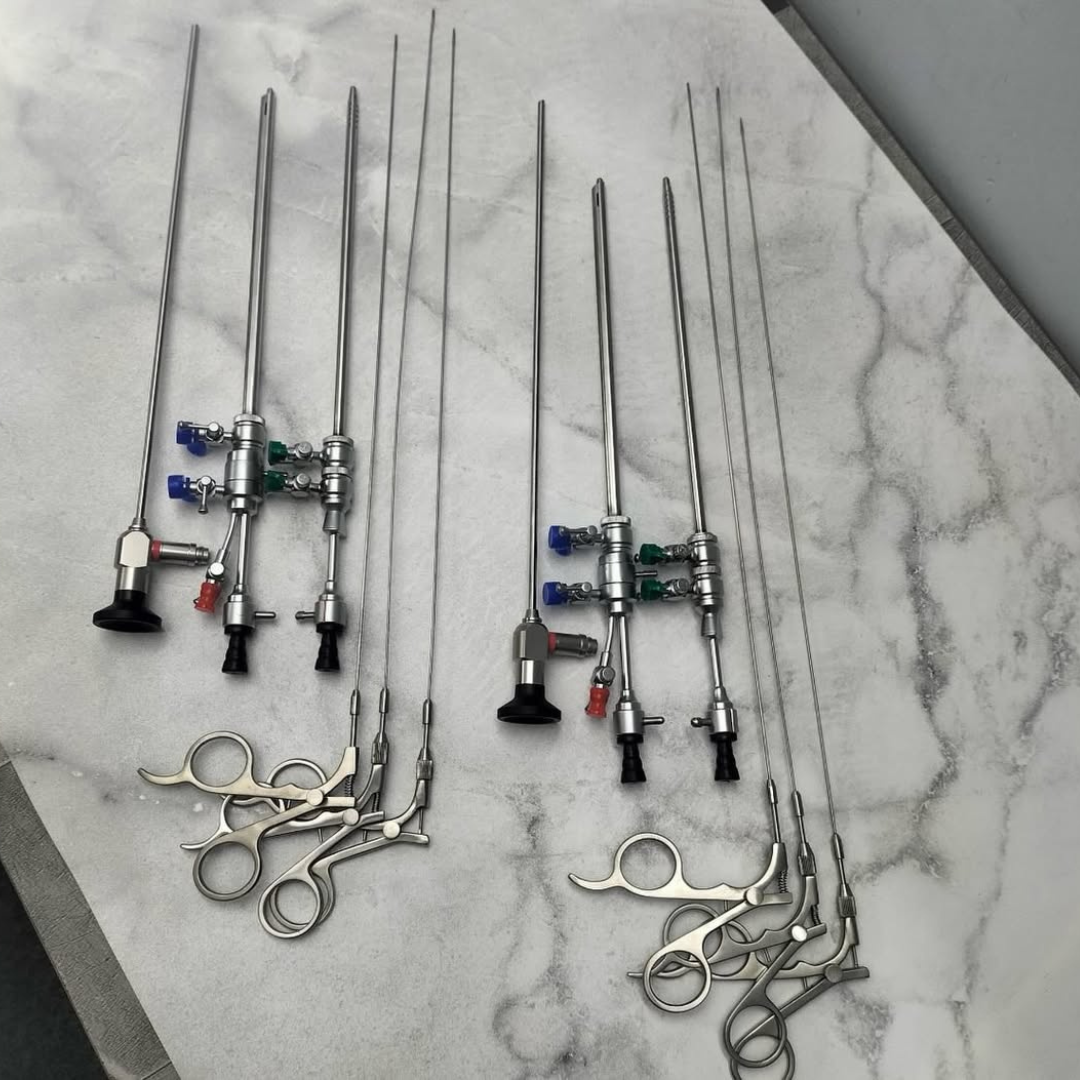
A comprehensive guide to urology surgical instruments — covering ureteroscopy and laparoscopic urology instruments, their uses in surgery and what buyers and distributors need to know when sourcing quality urology instruments.
Introduction
Urology is one of the fastest growing surgical specialties in modern medicine — driven by increasing demand for minimally invasive procedures and advanced surgical techniques for treating conditions of the urinary tract, kidneys, bladder and reproductive organs. At the heart of every successful urological procedure lies a set of precision surgical instruments — designed to deliver accuracy, safety and reliability in some of the most technically demanding surgical environments in modern medicine.
For buyers and distributors sourcing urology surgical instruments, understanding the key instrument categories, their surgical applications and quality requirements is essential for building a comprehensive and reliable urology instrument catalog. This guide covers two of the most important and in demand urology instrument categories — Ureteroscopy Instruments and Laparoscopic Urology Instruments.
Ureteroscopy Instruments in Surgery
What is Ureteroscopy?
Ureteroscopy is a minimally invasive surgical procedure used to diagnose and treat conditions of the ureter and kidney — including kidney stones, ureteral strictures, tumors and bleeding. It involves the insertion of a thin flexible or rigid ureteroscope through the urethra and bladder into the ureter and kidney — allowing the surgeon to directly visualize and treat the affected area without the need for open surgery.
Key Ureteroscopy Instruments
1. Ureteroscope
The ureteroscope is the primary instrument in any ureteroscopy procedure — a thin, long optical instrument inserted through the urethra into the ureter and kidney to provide direct visualization of the urinary tract. Available in rigid and flexible configurations:
- Rigid Ureteroscope — Used for procedures in the lower and mid ureter — provides superior image quality and instrument channel access
- Flexible Ureteroscope — Used for procedures in the upper ureter and kidney — allows navigation through the natural curves of the urinary tract
2. Stone Retrieval Basket
A fine wire basket instrument passed through the ureteroscope to capture and retrieve kidney stones from the ureter and kidney. Available in various sizes and configurations — nitinol stone retrieval baskets are the most widely used due to their superior flexibility and strength.
3. Ureteral Access Sheath
A thin tubular sheath inserted into the ureter before the ureteroscope — providing a stable working channel for repeated instrument passage during the procedure. It reduces trauma to the ureteral wall and improves surgical efficiency by allowing multiple instrument exchanges without repeated ureteroscope insertion.
4. Ureteral Dilator
Used to gently dilate a narrowed or strictured ureter — providing adequate access for the ureteroscope and working instruments. Available in balloon and graduated dilator configurations.
5. Biopsy Forceps
Fine cup jaw forceps passed through the ureteroscope working channel — used to obtain tissue samples from suspicious lesions in the ureter or kidney for histological examination and diagnosis.
6. Ureteral Stent
A thin flexible tube placed in the ureter at the end of a ureteroscopy procedure — maintaining ureteral patency and facilitating urine drainage from the kidney during the postoperative healing period.
Laparoscopic Urology Instruments in Surgery
What is Laparoscopic Urology?
Laparoscopic urology refers to the use of minimally invasive laparoscopic surgical techniques to perform complex urological procedures — including nephrectomy, pyeloplasty, prostatectomy and cystectomy. Laparoscopic urology offers patients significantly reduced recovery times, less postoperative pain and smaller incisions compared to traditional open urological surgery — making it one of the most important and rapidly growing areas of modern urology.
Key Laparoscopic Urology Instruments
1. Laparoscopic Trocar & Cannula Set
The trocar and cannula set is the entry point for all laparoscopic urology procedures — used to create access ports through the abdominal wall for the insertion of the laparoscope and working instruments. Available in 5mm, 10mm and 12mm sizes — with bladeless and optical trocar configurations for safer abdominal entry.
2. Laparoscopic Needle Holder
A specialized needle holder designed for laparoscopic suturing in urological procedures — used for reconstructive procedures such as pyeloplasty and vesicourethral anastomosis in laparoscopic prostatectomy. Available in straight and curved jaw configurations for different suturing angles and approaches.
3. Laparoscopic Clip Applier
Used to apply surgical clips to blood vessels, ducts and tissue during laparoscopic urological procedures — providing safe and reliable hemostasis and tissue occlusion. Available in 5mm and 10mm sizes with disposable and reusable clip configurations.
4. Laparoscopic Grasper & Dissector
Essential instruments for tissue manipulation and dissection in laparoscopic urology — used to grasp, retract and dissect tissue during nephrectomy, prostatectomy and other complex urological procedures. Available in atraumatic and traumatic jaw configurations for different tissue handling requirements.
5. Laparoscopic Scissors
Used for precise cutting and dissection of tissue in laparoscopic urological procedures — available in straight, curved and hook configurations for different surgical applications. Monopolar electrosurgical capability is available for simultaneous cutting and coagulation.
6. Laparoscopic Suction & Irrigation Cannula
Used to maintain a clear surgical field during laparoscopic urological procedures — removing blood, fluid and surgical debris from the operative site while simultaneously irrigating the area with saline solution. Essential for maintaining optimal visualization throughout complex laparoscopic urological procedures.
7. Laparoscopic Fan Retractor
Used to retract and hold back organs and tissue during laparoscopic urological procedures — providing the surgeon with clear access and visualization of the operative site. Its fan shaped design allows it to cover a wide retraction area with minimal instrument insertion.
What Buyers & Distributors Should Look for When Sourcing Urology Instruments
For buyers and distributors building a urology instrument catalog, here are the key quality and sourcing factors to consider:
- ✅ Premium Grade Stainless Steel — All reusable urology instruments should be manufactured from the finest grade stainless steel for superior corrosion resistance and long lasting performance
- ✅ International Certifications — Always source from manufacturers holding CE Mark and ISO 13485 certifications — ensuring instruments meet the highest international quality and safety standards
- ✅ Complete Range Availability — Choose a manufacturer that offers a complete range of urology instruments across multiple categories — simplifying your sourcing process and reducing supplier complexity
- ✅ OEM & Private Label Options — Look for manufacturers offering OEM and private label services — allowing you to build your own branded urology instrument catalog
- ✅ Export Experience — Source from manufacturers with proven international export experience — ensuring reliable supply, proper documentation and on time delivery to your market
Why Source Urology Instruments from Narham Enterprises?
At Narham Enterprises we manufacture and export a comprehensive range of premium surgical instruments from our precision manufacturing facility in Sialkot, Pakistan — the world’s surgical instrument manufacturing capital. Our instruments are trusted by hospitals, surgical centers and distributors across Europe, Middle East, USA & Canada and Africa.
- ✅ Premium Grade Stainless Steel Instruments
- ✅ CE Marked & ISO 13485 Certified
- ✅ Complete Range Across Multiple Surgical Specialties
- ✅ OEM & Private Label Manufacturing Available
- ✅ Proven Global Export Experience
- ✅ Competitive Pricing & Bulk Order Capability


