

Blog
kerrison Rongeur

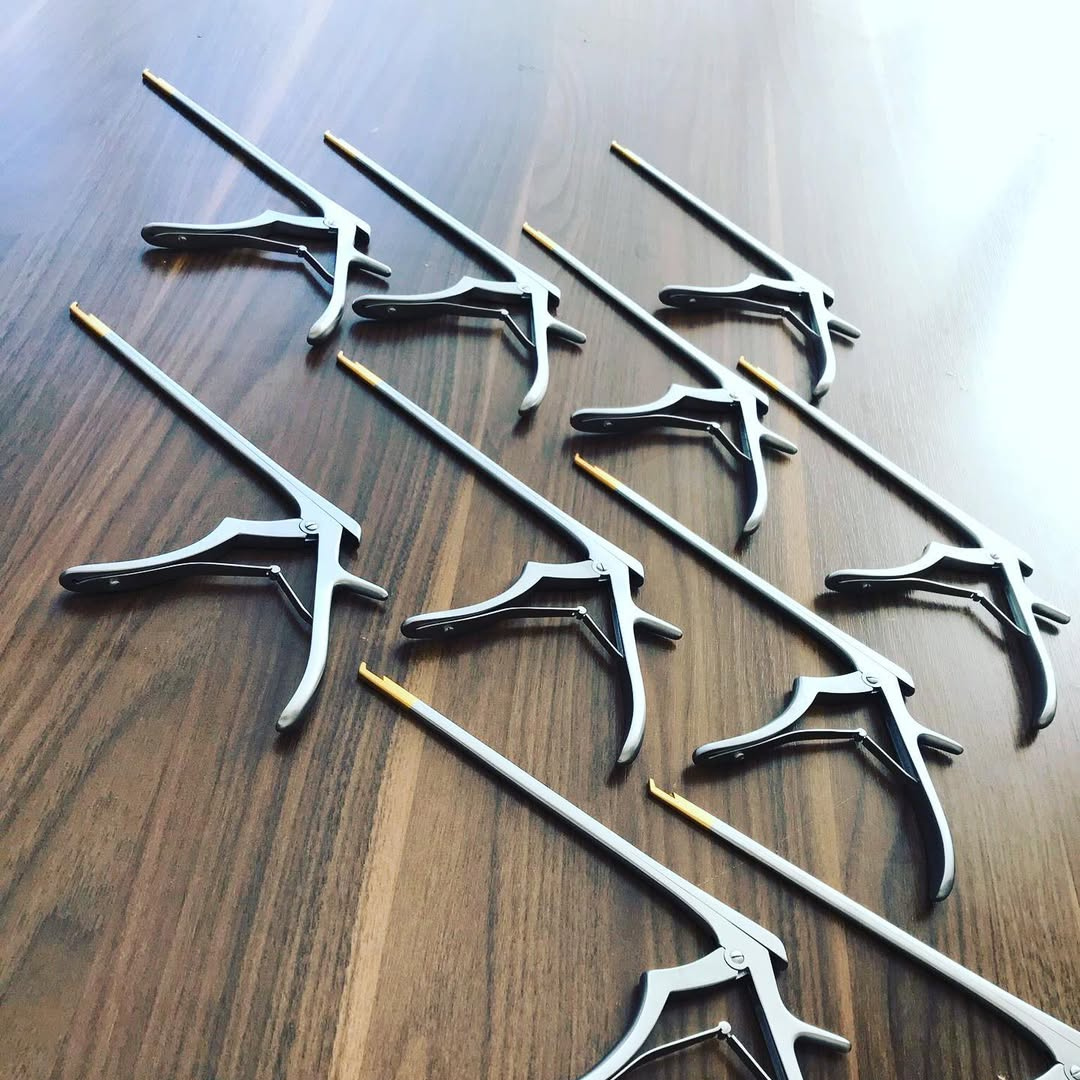
Kerrison Rongeur in Spinal Surgery — Uses, Types & Sizes Explained
A comprehensive guide to the Kerrison Rongeur in spinal surgery — covering its uses, types, sizes and why it is one of the most essential instruments in every spinal surgical procedure.
Introduction
Among the many instruments used in spinal surgery, the Kerrison Rongeur stands out as one of the most essential and widely used tools in the spinal surgeon's arsenal. Whether you are a spinal surgeon, hospital procurement manager or medical distributor — this guide covers everything you need to know about the Kerrison Rongeur — its uses, types and sizes.
What is a Kerrison Rongeur?
A Kerrison Rongeur is a specialized surgical instrument used in spinal and neurosurgical procedures to remove bone, ligament and soft tissue with precision and control. It is characterized by its distinctive footplate design — a flat angled footplate that slides under the tissue to be removed, allowing the surgeon to cut and remove precise amounts of bone or ligament with each bite — making it exceptionally safe for use in the delicate environment of the spinal canal.
Uses in Spinal Surgery
1. Laminectomy
Used to carefully and precisely bite away the lamina — the bony arch of the vertebra — to relieve pressure on the spinal cord and nerve roots, protecting underlying neural structures throughout the procedure.
2. Discectomy
Used to remove bone and ligament around the disc space — providing clear surgical access to herniated or damaged disc material that needs to be removed to relieve nerve compression.
3. Foraminotomy
Used to carefully remove bone and tissue narrowing the foramen — the opening through which spinal nerve roots exit the spinal canal — relieving nerve compression with precise biting action.
4. Spinal Stenosis Surgery
Used to remove bone, ligament and tissue narrowing the spinal canal — its ability to remove precise amounts of tissue with each bite making it essential for achieving adequate decompression safely.
5. Cervical Spine Surgery
Its fine footplate design and precise cutting action make it ideal for the delicate cervical spine environment — where precision and control are critical to protecting surrounding neural structures.
Types of Kerrison Rongeur
- Standard Kerrison Rongeur — Straight shaft with angled footplate — the most widely used type for general spinal decompression procedures
- Up Cutting Kerrison Rongeur — Cuts upward — ideal for laminectomy and foraminotomy where upward cutting action is required
- Down Cutting Kerrison Rongeur — Cuts downward — commonly used in cervical spine surgery for better access and control
- Micro Kerrison Rongeur — Smaller and more refined — designed for minimally invasive spinal surgery requiring exceptional precision
- Cervical Kerrison Rongeur — Longer slender shaft with finer footplate — specifically optimized for cervical spine surgical procedures
Sizes & Specifications
Bite Sizes
- 1mm — Most delicate and precise tissue removal
- 2mm — Most commonly used for general spinal procedures
- 3mm — Standard bone and ligament removal
- 4mm — More aggressive bone removal
- 5mm — Bulk bone removal in major decompression
Footplate Angles
- 40 Degree — Standard angle for most spinal procedures
- 90 Degree — For procedures requiring a more angled approach
Shaft Length
- 180mm — Standard for most spinal procedures
- 200mm — Extended for deeper surgical access
- 230mm — Extra long for maximum depth of access
Why Source from Narham Enterprises?
At Narham Enterprises we manufacture a complete range of premium Kerrison Rongeurs — available in all standard sizes, bite sizes and footplate angles — precision crafted from finest grade stainless steel in Sialkot, Pakistan.
- ✅ Premium Grade Stainless Steel
- ✅ All Standard Sizes & Configurations
- ✅ CE Marked & ISO 13485 Certified
- ✅ Exported to Hospitals & Distributors Worldwide


